Look Again
A virtual coffee with Jaewon Oh
ONE COFFEE – ONE STORY
Look Again
A virtual coffee with Jaewon Oh
From Seoul to Maastricht: a conversation about art, AI, nature, imperfection and learning to look again.
By Franceska (Franch) Davidhi • 27 September 2026
We meet over coffee, catch up over coffee, sometimes even work over coffee. Somehow, a simple cup of coffee has become part of many of the conversations that stay with us.
And that is where One Coffee – One Story begins.
Every month, I sit down with someone to discover not only what they do, but who they are behind their work, what inspires them, challenges them, and shapes the way they see the world.
I am Franceska, or Franch, my artistic alter ego, and I will be your coffee storyteller. For our first story, the coffee table stretched a little further than usual: from Maastricht all the way to Seoul, South Korea.
Meet Jaewon Oh, a visual artist whose work brings together technology, nature and the human body in ways that immediately caught my attention. So, over a one-hour virtual coffee, I wanted to understand: how does Jaewon see the world around him, and does it influence his art?
Jaewon, welcome, and thank you for sharing your story with Mosaïek. We all see the art of the artist, but we don’t always have the opportunity to get to know the artist behind the art. So, I’d like to start with you. Who is Jaewon when he is not creating?
Jaewon: I think I’m actually a pretty ordinary person. I like meeting friends, listening to music, walking around, and simply looking at things. Even when I’m not working, I tend to observe what’s around me. I’m not necessarily searching for anything special. I’m more drawn to accidental scenes from everyday life, or certain atmospheres that remind me of what I felt when I was younger, a kind of nostalgia.
“Accidental scenes”, I love that. For readers who have never visited the place where you live, could you describe a place or some “accidental scenes” from your everyday life that help us picture your world? What do you notice there that finds its way into your work?
Jaewon: I live in Seoul. I think Seoul is a city where nature and artificial environments constantly collide and overlap at very close distances. You can find old trees between tall buildings and busy roads, or plants growing through cracks in concrete.
Because I do a lot of client work, I’m always looking for small moments where I can mentally breathe. Recently, I’ve also been thinking a lot more about my physical condition and exercise. I spend so much time sitting down and working that I recently started boxing for my wellbeing. Physically exhausting myself through exercise strangely helps me reset my routine and creates some mental space where I can think more productively.
And having seen some of your art, you will probably soon come up with creative visuals that connect Boxing with elements of nature. But while waiting for that moment, I am curious to know if you remember when creating images first became important to you personally?
Jaewon: It’s difficult to choose one exact moment. I don’t think I started making images for any grand reason. I simply kept wanting to turn the images that appeared in my head while listening to music or looking at certain scenes into something I could actually see. I started with familiar tools like photography and Photoshop, and I enjoyed the process of reducing the distance between what I imagined and what I could actually create.
Finding one’s place in a changing creative world
And let’s not forget that we live in a time in which technology and AI are changing the creative world incredibly fast. How has finding your place in the creative industry been for you?
Jaewon: At first, it was difficult to explain exactly what kind of creative I was. I wasn’t only doing photography, 3D, or AI. As technology kept changing, the tools I used changed as well. At some point, I stopped trying to define myself through a particular tool or job title. I began to think that what mattered more was simply what kind of images I make.
And with technology evolving so quickly, how do you keep your work distinct and personal?
Jaewon: Especially as AI technology has developed so rapidly, I’ve felt that simply following the technology can quickly make everyone’s work look similar. Because of that, what I notice in everyday life, what I personally like, and which images I choose have become much more important to me. A lot of my commercial work comes from the entertainment industry, particularly K-pop. In the beginning, the briefs I received were fairly similar to those given to many other artists. Recently, however, people have started approaching me specifically because they have seen the mood and visual language of my personal work. Watching that transition happen has been quite surprising for me as well.
“Simply following the technology can quickly make everyone’s work look similar.”
When you begin a new piece, where does it usually start: something you have seen, an emotion, an idea, a texture, a technology, or something else?
Jaewon: It can begin in many different ways, but music is often one of my starting points. When I listen to music, certain textures, spaces, or movements sometimes appear in my mind. At other times, a photograph I took in everyday life becomes the starting point. I’m often more interested in uncontrolled images than perfectly composed photographs, something accidentally captured, a slightly strange composition, or a photograph where the flash is unusually harsh. Recently, I’ve been taking those kinds of images, adding elements and textures that don’t exist, and then compositing and refining everything again in Photoshop.
Reframing “bad pictures” as uncontrolled images and turning them into artwork – how fascinating. I should probably check my own camera roll for treasures.
You told us that the faster technology develops, the more interested you become in combining it with analog forms of expression. Where does that feeling come from?
Jaewon: I think that as technology develops, creating a technically perfect image becomes increasingly easy. Clean, beautiful, highly polished images can now be produced incredibly quickly. Because of that, I’ve become more interested in traces of human intervention and in accidents, things like a blurred photograph, unexpected lighting, a hand-drawn line, or a rough texture that cannot be completely controlled.
The more AI gives me something that feels too perfect, the more I want to introduce imperfections or physical qualities back into the image. To me, analog and digital approaches aren’t opposites. They make each other more interesting.
Help us understand: what does analog creation give you that digital technology cannot, and what does technology make possible for you? Could you give an example of how you combine them?
Jaewon: Analog processes contain things that I can’t completely control. Real light, weather, camera movement, or other unexpected elements can enter an image without being planned. I like that kind of accident.
Digital technology and AI, on the other hand, allow me to quickly experiment with scenes that would be difficult to create in reality.
For example, I might take a portrait I photographed myself and generate botanical structures that merge with the human body, or add creatures and objects that don’t exist to a photograph of a real street. I then return to Photoshop to refine the forms and textures. It’s a way of placing accidents captured from the physical world and digitally created unreality within the same image.
The creative industry is huge, with so many different artists and directions. How does working in the industry influence what you create? Have you ever felt tension between your own artistic direction and the expectations of a client or a trend? I want to understand how you handle such situations.
Jaewon: Commercial work naturally comes with a client’s objectives and messages. In personal work, I can follow whatever direction interests me until the end, whereas commercial work has to communicate clearly to other people. At first, I sometimes felt that these requirements conflicted with my own work. Now, however, I often find that limitations force me to discover approaches I wouldn’t otherwise have considered. I still try not to follow trends too directly. I actively use new technologies and methods of expression, but ultimately, I want to make work where I can explain why I chose to create that particular image.
Seoul, nature and the human body
And how has growing up and living in Seoul shaped your relationship with nature and technology?
Jaewon: In Seoul, I think we encounter nature less often in a completely untouched state and more often within environments created by people.
I’m particularly interested in the disorder of the city. Signs are often installed almost chaotically, without any obvious visual order, and sometimes they seem like visible expressions of human desire. At the same time, there are trees between buildings, grass beside roads, and small mountains surrounded by apartment complexes. Nature and the city are never completely separated. Technology is also extremely close to everyday life here. Perhaps because I grew up in this kind of environment, I don’t really think of nature and technology as opposites. I’m more interested in how these different systems continuously mix with and influence one another.
There is another aspect of your work which I find fascinating and a little out of this world, to be honest. When I saw your work for the first time, I was struck by how the human body, emotions, and elements of nature seem to meet. What draws you to that intersection?
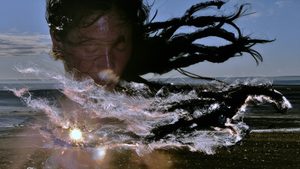
Jaewon: I think the human body and nature share more visual similarities than we often realize. Blood vessels and tree branches, skin and bark, hair and grass are completely different things, yet their forms and patterns can resemble each other. I enjoy discovering those similarities. Sometimes two completely unrelated images can overlap and suddenly begin to look like a single, natural form. The human body is also a very direct way of communicating emotion, which makes it easier for me to become immersed in the image. When it is combined with natural forms, I think the result can feel more personal than a landscape alone.
You say that you explore moments when “the boundary between humans and nature becomes less distinct.” What does that mean to you personally? Do you experience them as separate, or is that a distinction we have learned to make?
Jaewon: We are accustomed to thinking of ourselves as separate from nature, but humans are also part of nature. I’m not necessarily interested in making a statement that this boundary should disappear. I’m more interested in the brief moments when a distinction we normally take for granted begins to feel uncertain. When human skin starts to resemble tree bark, or a plant stem begins to resemble a blood vessel, there is a brief moment when it becomes difficult to tell what belongs to the human body and what belongs to nature. I find that small moment of confusion fascinating.
Do you hope viewers of your art take away a particular feeling or message, or do you prefer them to find their own meaning?
Jaewon: I don’t create a single meaning and expect viewers to understand it exactly as I intended. I would rather they first be drawn to the image itself, and then, after looking at it a little longer, begin to develop their own thoughts based on their own experiences. For one person, an image might be beautiful and bring back an old memory. For someone else, the same image might feel strange or slightly uncomfortable. I find those differences interesting. I prefer an image to leave behind a feeling or a question rather than explain everything.
When the work leaves the artist
Even though artists don’t always admit that they have a favorite piece of their art, I still insist on asking, because deep down I believe that for every artist there is one piece that made their heartbeat differently. What is yours? Show us one work you have created that feels particularly personal to you.
Jaewon: One of my recent works feels particularly meaningful to me. It brings together the texture of human clothing, the organic surfaces of cave walls, and the eye of an enormous creature alongside a house, all within a single sequence. You may view it by clicking this link.
Okay, I need a moment to take this one in before we continue. (laughs)
Jaewon: (laughs)
Back to the interview, because now I am curious how you came to this creation. Could you walk us through it, from the first idea to the finished piece? What changed along the way, and was there anything you struggled to get right?
Jaewon: I first photographed clothing with the kinds of textures and forms I’m personally drawn to. From there, I generated unreal imagery and began combining those elements using editing tools. I created a series of images through that process and eventually developed them into a single moving sequence. My friend Jaehyun Nam then created an amazing sound piece for it, which really helped bring the work together and complete it.
That is interesting and also seems like a lot of work. Not an easy thing to do. For me, it was a full experience, but has anyone ever responded to your work in a way that surprised you or challenged what you thought you had created?
Jaewon: There have been times when I made an image simply because I found its form or texture interesting, and someone else connected it to a deeply personal story. I don’t usually determine every meaning before I begin working, but people have sometimes found feelings such as loneliness, death, or growth in my images. At first, I was surprised by interpretations that I had never intended. Now I really enjoy those responses. Once an image leaves my hands, I sometimes feel that it no longer belongs entirely to me.
“Once an image leaves my hands, I sometimes feel that it no longer belongs entirely to me.”
Has creating these works changed the way you personally look at nature, or at yourself as part of it?
Jaewon: I think I now tend to look at nature through smaller structures and patterns rather than as a complete landscape. When I look at a tree, I often notice the way its branches divide or the texture of its surface before I notice the tree as a whole. When I look at a plant, I observe the shape of its leaves or the way its stems connect. It isn’t necessarily because I’m consciously looking for something I can use in my work. After making images for so long, I think the way I look at things has naturally changed.
Now back to your daily life again. Outside your work, how do you balance time on screens with the physical world? Is there an everyday habit, place, or activity that helps you feel connected to nature?
Jaewon: Because of the nature of my work, I spend most of my day in front of a screen, so I can’t really say that I’ve found a perfect balance.
That’s probably why I enjoy walking without a particular destination whenever I’m outside. I listen to music, look around, and take photographs as I move through the city.
Ordinary photographs taken on my phone often become starting points for later work. So for me, time away from the screen isn’t completely separate from my work. It is also a way of collecting material and experiences that I can eventually bring back into it.
Okay, I really have to scroll through my photos. I am sure I can find some art in there (laughs). But unlike mine, your images can reach someone on the other side of the world almost instantly. What, if anything, from your own experience do you hope travels with them?
Jaewon: I don’t necessarily expect people to understand my environment or experiences exactly as I do. What interests me more is that people living in completely different places can look at the same image and connect it to entirely different memories or emotions. When people from countries I’ve never visited respond to my work through social media, I’m reminded that images can travel much faster than language. I’m most curious about what they saw in the work and how they connected it to their own surroundings or experiences. I think that possibility is one of the things that excites me most about making and sharing images.
Before we finish our coffee
For a person drawn to creating who does not yet have a clear style or expensive tools, and who might be reading this article, what would you suggest trying first?
Jaewon: I would suggest not trying to establish a style too early. I didn’t begin by making the kind of work I make today either. I collected images that interested me, tried making things myself, failed repeatedly, and gradually began to recognize what I was consistently drawn to. New and powerful technologies are appearing incredibly quickly now, but I think what you choose is becoming more important than which tool you use. So rather than starting with expensive equipment, I would recommend using whatever is available, taking photographs with your phone or working with free software, and paying attention to what you keep wanting to look at.
We are coming to the end of our interview, and I have two last questions for you. Firstly, what are you searching for through your art?
Jaewon: I think I’m searching for ways to see things differently, things that I might otherwise have simply passed by. I’m more interested in discovering new relationships between things that already exist than in creating an entirely new world. When things that seem unrelated, humans and plants, nature and technology, real photographs and constructed images, are placed together, there are moments when an image appears that I couldn’t see before. Even as technology continues to change, I hope I can hold on to that sensitivity for discovering those moments. Ultimately, I think what I’m searching for is not new technology itself, but a way to make the familiar feel unfamiliar again
“What I’m searching for is not new technology itself, but a way to make the familiar feel unfamiliar again.”
Secondly, do you have a message you are trying to convey to this world of ours?
Jaewon: I don’t usually begin a work with one clear message that I want to communicate. If I define the message too clearly from the beginning, I feel that the image can easily become just a tool for explaining that idea.
But there are definitely certain thoughts that keep returning throughout my work. One of them is questioning the boundaries between things we tend to think of as separate, humans and nature, reality and the virtual, analog and digital. I think things we consider opposite or disconnected are often much more closely related than we assume.
Rather than creating something entirely new, I’m more interested in the new perspectives that can emerge when familiar things are connected in unfamiliar ways. I would be happy if my work could make someone look again, even briefly, at a person, a natural form, or an ordinary object they normally take for granted.
I think about how clothing or tragic imagery from old noir films, for example, can later be seen in a completely different context and appreciated as incredibly beautiful mise-en-scène. I’m interested in how the meaning and feeling of familiar things can shift depending on how we look at them.
So if I had to reduce it to one message, it would probably be about: slightly blurring the boundaries between familiar things and encouraging us to look again at what we think we already know.”
And perhaps that is a good place to finish our coffee.
I started this conversation curious about how Jaewon creates his images. I leave it thinking more about how he sees: a blurred photograph as something worth keeping, a tree branch as something that can resemble a blood vessel, and imperfection as something that can become part of the work rather than something to erase.
Somewhere during our conversation, I realized I was already thinking differently about the ordinary images sitting on my own phone. Maybe that is what stayed with me most: not the idea of looking for something perfect, but of looking again at what is already there.
You can see more of Jaewon Oh’s work on his Instagram page. And if you have a story to share, there is always a coffee table waiting for you to sit and be heard. You may contact us at: hello@mosaiekmagazine.nl.
Your coffee storyteller,
Franch.